
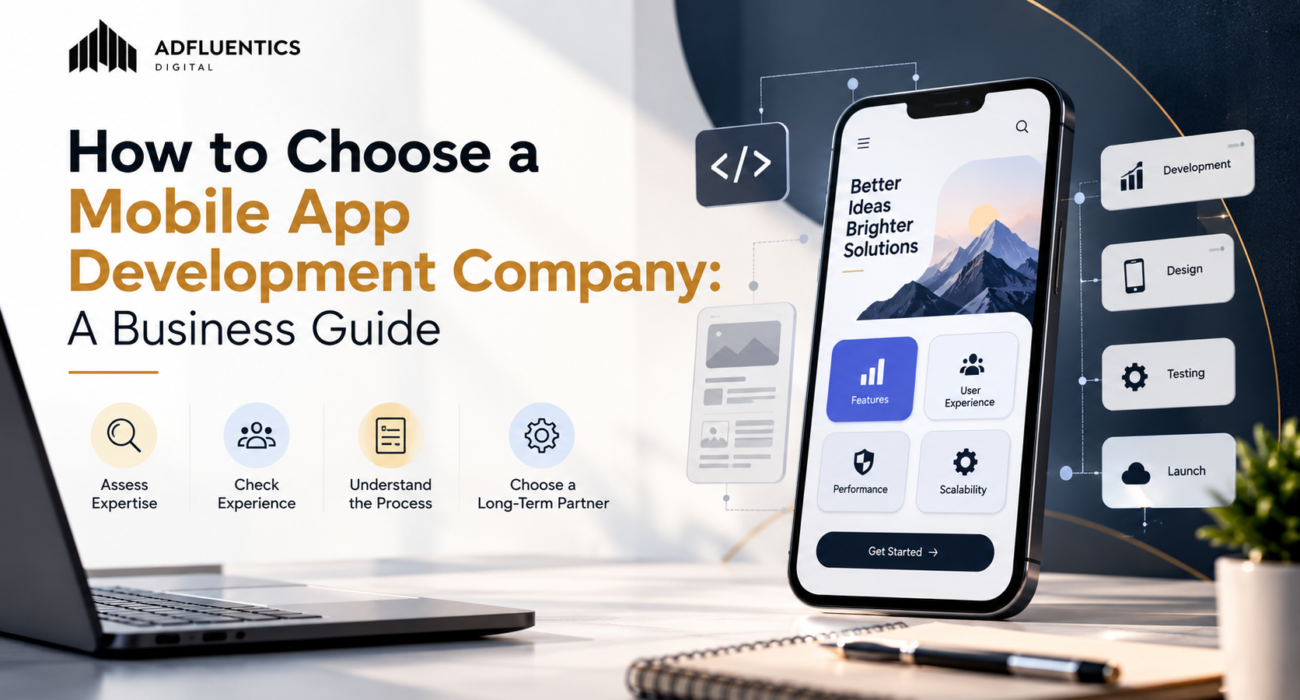
How to Choose a Mobile App Development Company: A Business Guide
A mobile app can make it easier for customers to book appointments, purchase products, access services, or manage their accounts. But turning an idea into a useful app involves more than attractive screens.
You need clear requirements, thoughtful design, reliable development, and a plan for ongoing support.
Choosing a mobile app development company is therefore an important business decision. The right partner should help you evaluate your idea, explain technical choices, and define what can realistically be delivered.
Here is what to consider before you hire.
Start With the Problem Your App Should Solve
Before discussing features, identify the problem you want to address.
Are customers struggling to book your services? Does your team spend too much time handling repeat requests? Would account access or order tracking improve the customer experience?
Describe the problem in practical terms. For example:
“Customers currently call to book appointments. We want them to see available slots and manage bookings themselves.”
This gives a development team a clearer starting point than “We need an app like our competitor’s.”
Also consider whether an app is necessary. A mobile-friendly website may meet some requirements with fewer installation barriers. A suitable partner should help you compare options rather than assume every idea needs an app.
1. Look for Relevant, Verifiable Experience
Review the company’s portfolio, paying attention to projects with requirements similar to yours.
An ecommerce app, for example, involves different workflows from an internal employee tool. Relevant experience can help a team recognize challenges, although it does not guarantee the outcome of your project.
Ask:
- Which parts of the project did your team deliver?
- Can we view the published app or a demonstration?
- What challenges did you encounter?
- How did you handle testing and post-launch issues?
Screenshots demonstrate appearance. A working demonstration reveals more about navigation, functionality, and usability.
Where client confidentiality limits access, ask whether the company can explain its contribution without disclosing private information.
2. Define a Practical First Version
It is tempting to include every feature at launch. However, a large initial scope can increase cost, complexity, and testing requirements.
Work with your mobile app development company to identify the smallest useful version of the product.
For a booking app, that might include:
- Account access.
- Service selection.
- Available appointment slots.
- Booking confirmation.
- Cancellation or rescheduling.
Features such as loyalty programmes or advanced recommendations might follow later if customer needs justify them.
A focused first release can help you gather feedback before committing to additional functionality.
3. Understand the Technology Recommendation
Your development partner should explain why a particular approach suits your requirements.
Native development uses platform-specific technologies. Cross-platform approaches allow teams to share parts of the code across platforms. The practical choice depends on features, integrations, performance requirements, available skills, and maintenance plans.
Avoid choosing solely because a technology sounds popular.
Ask how the proposed approach affects:
- Access to device features.
- Compatibility with required services.
- Testing across devices.
- Future updates and developer availability.
- Long-term ownership and maintenance.
You do not need to become a developer. You need enough information to understand the trade-offs.
4. Evaluate Design Through Real Tasks
A polished interface is useful only when people can complete their tasks.
Ask how the team researches user needs and tests proposed designs. Reviewing a clickable prototype before development can help identify confusing steps early.
For example, can someone book a service, correct a mistake, and find their confirmation without assistance?
Discuss accessibility too. Readable text, clear labels, suitable contrast, and support for assistive technologies should form part of design and testing.
Decisions should reflect the intended audience, including their devices, language needs, and familiarity with apps.
5. Clarify Testing and Quality Checks
Ask what will be tested before release and who is responsible for approving the app.
Testing should address more than whether individual buttons work. Relevant scenarios may include interrupted connections, failed payments, invalid entries, different device sizes, and account recovery.
For a shopping app, what happens if payment succeeds but the confirmation screen does not load?
Request a testing plan covering the important user journeys and supported devices. Also clarify how defects are recorded, prioritized, and resolved.
No responsible team can promise an app will never contain bugs. A clear process for finding and handling them is more meaningful.
6. Discuss Data Protection and Access
Understand what information your app needs and why.
Collecting unnecessary personal information creates additional responsibilities. Discuss data storage, access controls, permissions, and deletion processes with the development team.
Ask who will manage administrator accounts and third-party services. Access should be appropriate to each person’s responsibilities.
Privacy and security requirements vary by the app’s functionality, users, and operating regions. Identify these requirements early and obtain specialist advice where needed.
Be cautious of broad promises such as “completely secure.” Ask about the actual safeguards and review processes included.
7. Compare Written Proposals Carefully
A quotation should explain what you are paying for.
Check whether it includes research, design, development, backend systems, integrations, testing, release support, and maintenance.
Clarify:
- Deliverables and approval milestones.
- Client responsibilities and dependencies.
- How additional requests are priced.
- Recurring service or infrastructure costs.
- What happens if the project ends early.
Ownership also needs attention. Confirm arrangements for source code, design files, app store accounts, documentation, and licensed components.
Comparing equivalent scopes is more useful than comparing headline prices alone.
8. Plan Beyond Launch
Publishing an app is one stage in its lifecycle.
Operating systems, devices, external services, and customer expectations change. Your app may need compatibility updates, bug fixes, security improvements, and feature refinements.
Ask about support availability, response arrangements, maintenance charges, and handover documentation.
Define useful measures of success as well. Depending on your goal, these might include completed bookings, successful purchases, repeat usage, or fewer abandoned tasks. Downloads alone provide a limited picture.
Choose a Partner Who Explains Their Decisions
A dependable mobile app development company should demonstrate relevant experience, communicate clearly, and support its recommendations with understandable reasoning.
At Adfluentics Digital, we help businesses approach mobile app design and development around their audience, practical requirements, and goals.
Start with a clear problem, agree on a manageable scope, and evaluate the proposed solution carefully. That groundwork gives your app project a more informed direction.